





FleetHQ Blogs

Turo Fees Explained: Strategic Asset or Revenue Drain?

Turo makes it easier for vehicle rental providers to arrange rentals, but the platform’s fees and pricing structure can erode overall profitability. Turo hosts sometimes wonder how much Turo takes, as platform commissions, guest travel fees, protection plans, and restricted customer ownership can all affect long term earnings. But for serious fleet owners, the real question is not just whether Turo brings bookings. The real question is: how much does Turo take, and how much profit are you leaving behind by depending on the platform for every reservation? In 2026, smart operators are looking at Turo differently. They are not treating it as the entire business. They are using it as a single acquisition channel while building their own direct booking system with professional car rental software. Because once you understand the full cost of marketplace dependency, direct bookings are no longer just an option. They become a serious strategy for protecting your margins.

How Much Does Turo Take from Hosts?

Turo’s host earnings vary by protection plan, market, trip type, and platform structure.

The platform leverages diverse revenue streams, operating as a marketplace ecosystem in which host earnings and guest pricing are shaped by multiple fee layers.

For hosts, the key number is the portion of the booking they actually retain.

On many bookings, a host may retain a large share of the trip price, while a significant portion still goes to the platform. For a casual host, this is often acceptable, since Turo provides traffic, booking tools, trust, and protection.

For a fleet operator, that percentage may determine whether the business sustains activity or expands.

The Visible Cost: Platform Commission

The clearest expense is the platform commission.

When a guest reserves your vehicle via Turo, the platform handles the transaction, manages the marketplace, and retains a portion of revenue. The host receives the balance according to the plan and trip details.

Here is the simple reality:

On Turo:

A $1,000 booking does not necessarily equal $1,000 in host revenue.

With direct booking:

A $1,000 booking through your website lets you control the entire rental sum, excluding standard payment, insurance, and operating expenses.

This comparison between Turo host earnings and direct bookings is crucial.

Turo gives you access to demand.

Direct booking gives you control over revenue.

Both can have a place in your strategy, but they should not play the same role.

The Hidden Cost: Guest Fees and Price Inflation

Any hosts only look at what they receive. But experienced operators also look at what the guest pays.

Turo may charge guests additional trip related fees. Even when those fees do not come directly out of your payout, they can still affect your business.

Why?

Because the guest compares the final checkout price, not just your daily rate.

If your vehicle appears affordable at first but becomes expensive at checkout, some guests may abandon the booking or compare it to traditional rental companies. This can make your listing feel less competitive, even if your own payout is not increasing.

Turo itself has acknowledged the importance of competitive pricing and has made updates around trip fees and pricing transparency for certain trip types and markets.

For hosts, this proves an important point: pricing friction matters.

With your own direct booking website, you have more control over the final customer price. You can offer guests a better deal while still keeping more revenue than you would through a marketplace booking.

That is where direct booking becomes powerful.

The Bigger Risk: You Do Not Fully Own the Customer

The most overlooked issue with marketplace bookings is customer ownership.

When a guest finds you on Turo, the platform owns most of the booking journey. You provide the vehicle, handle the real world experience, manage the handoff, keep the car clean, and deliver the service.

But the long term relationship often remains tied to the platform.

That limits your ability to build:

  • Repeat bookings
  • Local customer lists
  • Corporate rental accounts
  • Referral programs
  • Email campaigns
  • Seasonal offers
  • Direct brand recognition

This is where car rental management software becomes more than an operational tool. It becomes a growth asset.

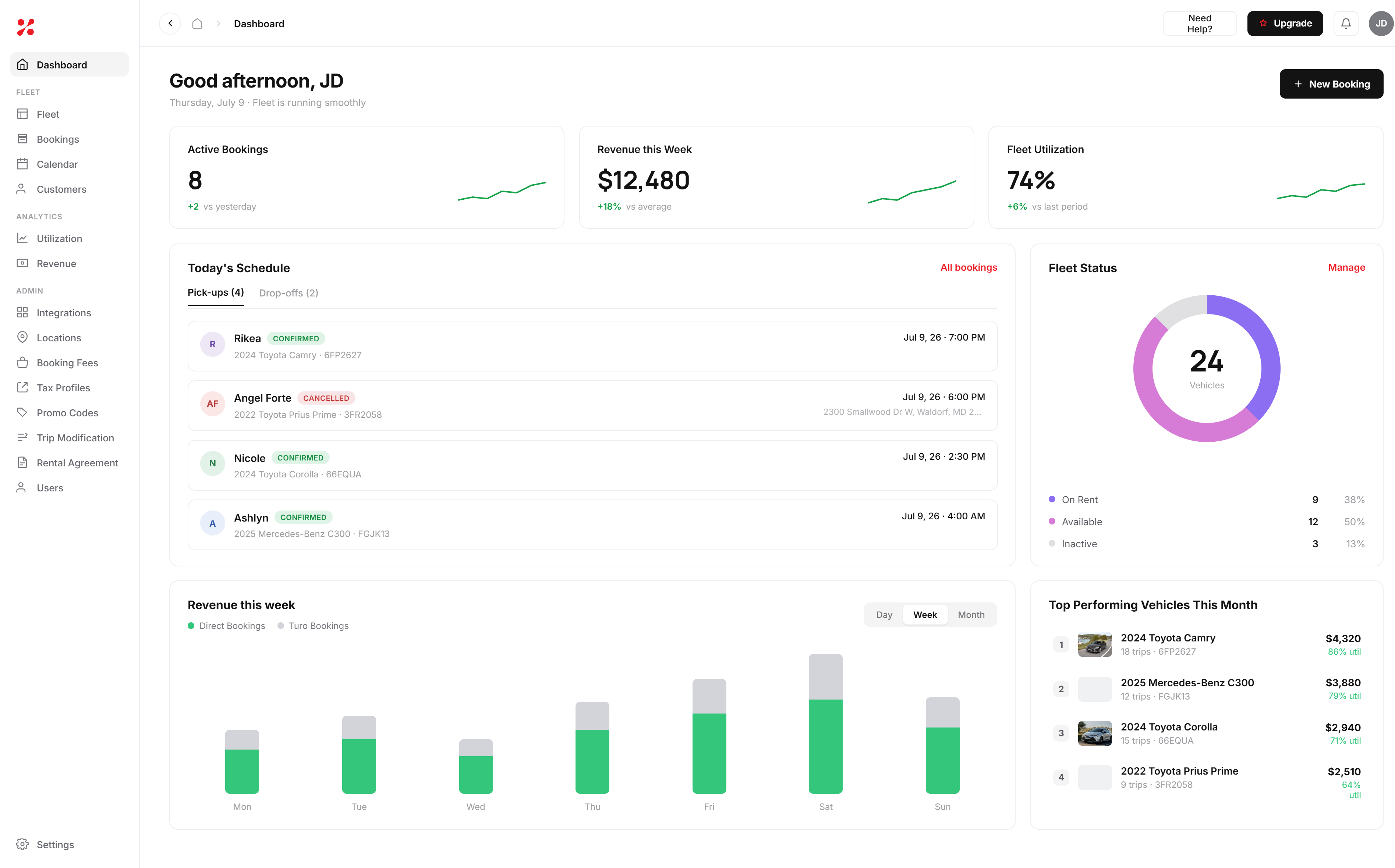
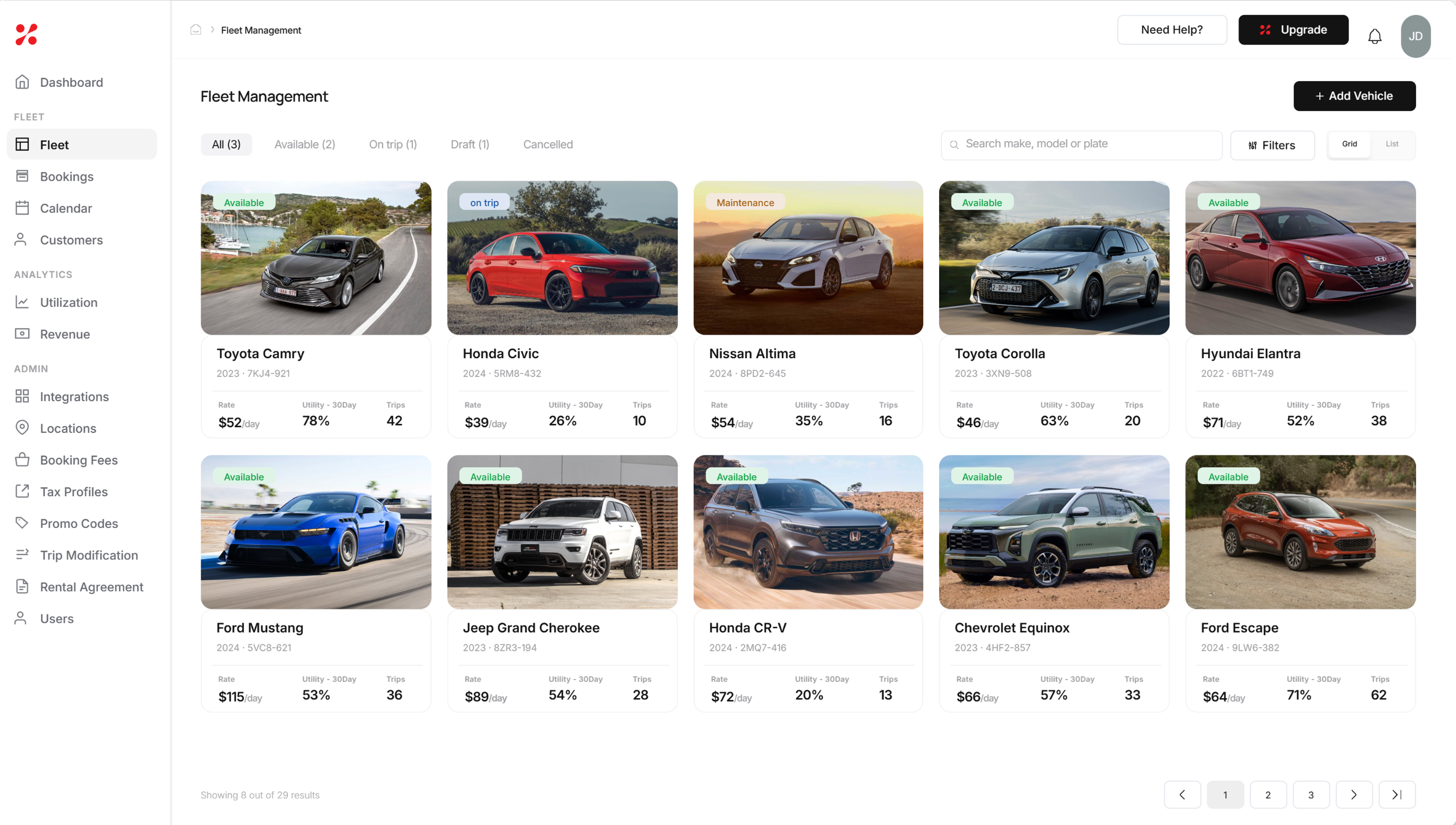
With FleetHQ, your business can manage bookings, payments, rental agreements, insurance options, and customer records in one system. Instead of sending every repeat renter back to a third party marketplace, you can build a direct relationship under your own brand.

That is how a rental operation becomes more stable, more profitable, and more valuable over time.

Turo Is Useful — But It Should Not Be Your Entire Business

Turo is not the enemy. In fact, for many hosts, it is a strong starting point.

It can help you validate demand, get early bookings, reach travelers, and fill unused vehicle days. Turo has also made updates intended to support host profitability, including changes to longer trips, discounts, guest pricing, and certain trip fee reductions.

But even with those improvements, a serious fleet owner should avoid building the entire business on rented visibility.

Because when your business depends on one marketplace, you are exposed to:

  • Fee changes
  • Ranking changes
  • Policy updates
  • Pricing pressure
  • Guest fee changes
  • Account risk
  • Limited customer data

A marketplace can bring revenue. But it does not always build brand equity.

That is why the strongest operators use a hybrid model. Combining marketplace exposure with direct booking platforms and their own site lets operators reach wider audiences, control brand visibility, achieve greater profitability, and build stronger customer relationships.

They use Turo for discovery.

They use FleetHQ for direct bookings.

They use their own website to build long term profit.

The FleetHQ Advantage: Reclaiming the Margin

FleetHQ empowers rental operators to take full control over bookings and eliminate platform dependency.

FleetHQ enables rental businesses to deliver a professional customer experience beyond Turo, while maintaining essential operational structure.

FleetHQ supports:

  • A mobile optimized direct booking website
  • Online reservations
  • Fleet availability management
  • Stripe payment integration
  • Automated e-Sign rental agreements
  • Customer records
  • Damage and liability insurance options through Bonzah
  • Repeat guest booking flows
  • Private brand control

This distinction elevates casual hosts into established operators. Casual hosts rely on marketplace bookings; professional rental businesses own their booking process.

With advanced car rental software, your website becomes a direct revenue channel—not merely a contact page.

Turo Host Earnings vs Direct Bookings

Let’s look at a simple example.

Turo Booking Example

Booking value: $1,000

Host receives: A reduced payout after the platform structure and applicable plan

Customer relationship: Mostly platform controlled

Repeat booking path: Usually through the marketplace

FleetHQ Direct Booking Example

Booking value: $1,000

Host receives: Full rental amount before standard payment processing and operating costs

Customer relationship: Owned by your business

Repeat booking path: Controlled by your brand

This is the real difference between marketplace revenue and owned revenue.

You do not need to move every booking away from Turo immediately. Even shifting a portion of repeat guests to direct booking can improve your car rental profit margins without buying more vehicles.

That is the key!

More profit does not always require a bigger fleet. Sometimes it requires a better booking channel.

The Smarter 2026 Strategy: Marketplace for Leads, FleetHQ for Wealth

The top operators think beyond one booking at a time.

They understand that the first booking is an acquisition. The second booking is where profit can improve.

A guest may discover your vehicle through Turo. But after a great experience, that guest should know how to book directly next time.

This approach allows you to:

Keep Turo as a lead source
Reduce dependency on platform bookings
Offer better pricing to repeat customers
Keep more revenue from each direct booking
Build a customer database
Grow your own rental brand

This is why FleetHQ is built for operators who want to grow beyond marketplace hosting.

It gives you the infrastructure to run your private rental business with professional systems, instead of managing everything manually through messages, spreadsheets, and third party platforms.

Why Direct Booking Improves Car Rental Profit Margins

Profit margin is not only about charging more. It is about keeping more of what you already earn.

Direct bookings can help improve margins because they reduce marketplace dependency and give you more control over the full transaction.

With direct booking, you can control:

  • Pricing
  • Discounts
  • Deposits
  • Insurance options
  • Rental terms
  • Customer communication
  • Upsells
  • Repeat guest offers
  • Local SEO traffic

For example, you may offer a guest a slightly lower total price than they would pay on a marketplace, while still earning more than you would through a platform booking.

That creates a win win situation as it creates an opportunity for a guest to get a better deal, and also it helps your business keep more revenue, and in return it keeps your brand stronger.

Own Your Profits

Stop renting your business. Start owning the terms. The move to private rentals isn’t a “risk”, it’s a strategic necessity for anyone looking to scale a serious fleet in 2026.

Calculate how much you can save with the FleetHQ Profit Calculator

Conclusion

Turo is useful for attracting bookings, but relying on it completely can reduce profit and limit customer ownership. A smarter approach is to use Turo for exposure while building direct bookings through FleetHQ.

With FleetHQ, rental operators can control pricing, manage bookings professionally, keep more revenue, and build stronger customer relationships for long-term growth.

Share this post

Still renting only on Turo?

Calculate how much you can save with FleetHQ

You might be giving away hundreds each month without realizing it.

Use our calculator to compare what you earn on Turo vs. what you could earn with private rentals, using the same car, same rates, same effort.

Document

How much is your daily rental rate?

$72 /day

How much is your Utilization?

57%

We can help you save

$0 /Annually
Start Free Trial
Our Pricing

Simple, Scalable Pricing

Whether you’re running 3 cars or 30, you get the same full-feature experience. Just choose the plan that fits your fleet size.

Our blogs

Resources and Insights

Subscribe to learn about new product features, the latest in technology, solutions, and updates.

We care about your data in our Privacy Policy.