
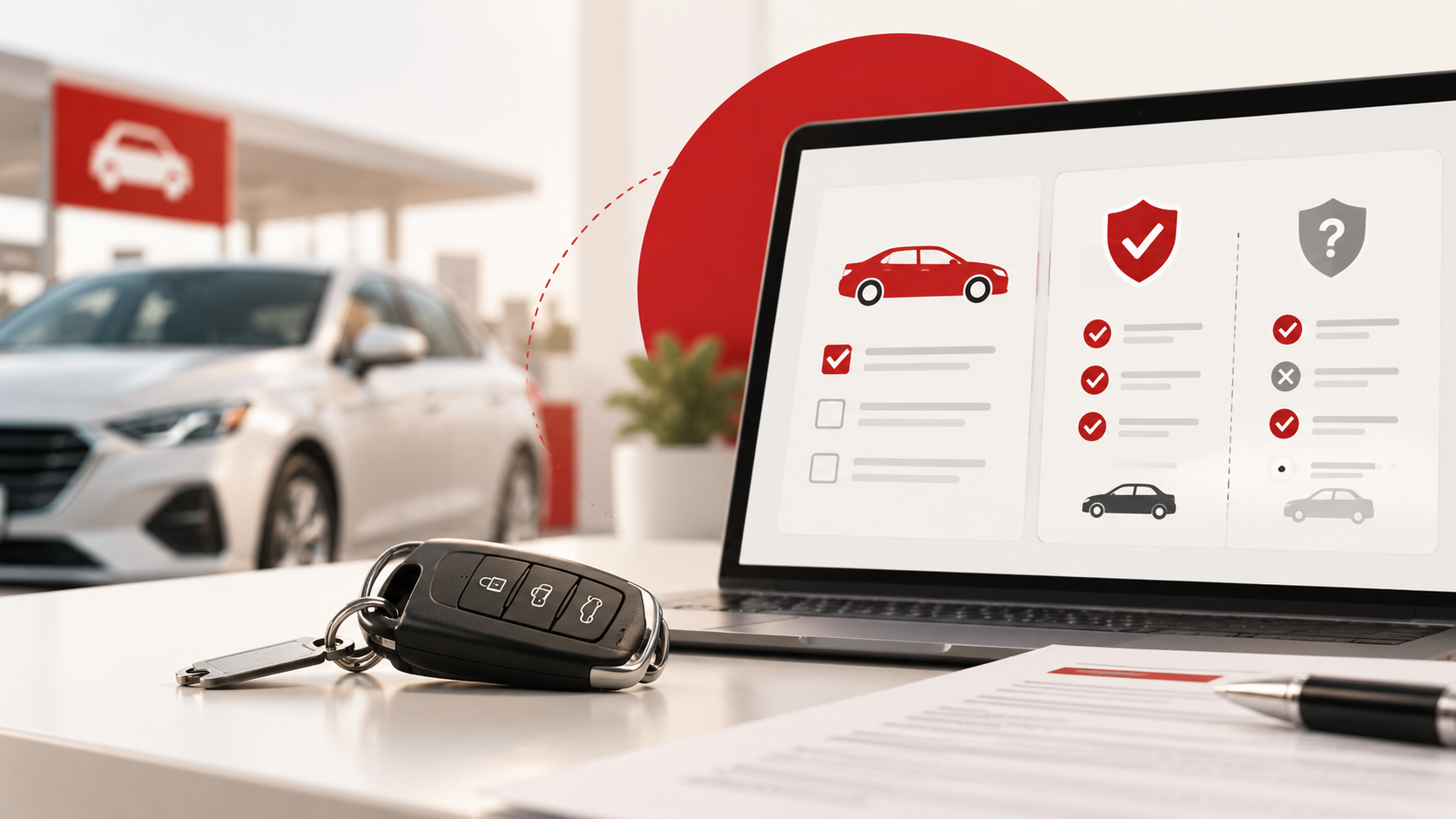
Often, but never automatically. Coverage depends on whether the policy has rental-use provisions, whether the driver is actually a named insured, and what the vehicle is being used for. The mistake operators make is treating a photo of an insurance card as an answer. Five things need confirming before keys move, and a card confirms none of them.
This article is not insurance advice. Coverage rules vary by state and carrier. Confirm your position with a licensed broker who works with rental fleets.
Quick summary
- A personal policy often extends to rental vehicles, but the extension is conditional.
- Commercial use, including rideshare and delivery driving, is excluded by most personal policies.
- A valid policy that does not name your renter provides your renter nothing.
- An insurance card is a snapshot of a past state and is trivially forged.
- Where coverage cannot be confirmed, purchased trip protection turns a lost booking into a covered one.
Does a personal policy cover a rental vehicle?
Many personal policies extend some coverage to rental vehicles, but conditionally. It typically applies only to the named insured and permitted drivers, only to vehicle classes similar to the one on the policy, and only when the rental is for personal use.
The word doing the work is extend. A personal policy is written to cover a specific vehicle and specific drivers. Any coverage reaching a rental car does so as a secondary extension with its own conditions, and those vary by carrier and state.
This is why "I have insurance" is not information. The question is whether that insurance reaches your vehicle, with this driver, for this use.
What is typically excluded?
Four things, any of which can leave a rental effectively uninsured.
Commercial use
If your renter is driving for a rideshare or delivery platform, most personal policies exclude that outright. This is the most common gap for operators serving gig drivers, and our guide to renting cars to rideshare and delivery drivers covers how to handle it.
Vehicle class
A policy covering a mid-size sedan may not extend to a high-value SUV. Some carriers cap the extension by vehicle value.
Unnamed drivers
Someone who is not the named insured and not a permitted driver is usually outside coverage entirely, even if the policy is valid.
Geographic terms
Some policies restrict coverage by state or exclude cross-border travel.
Why does "named insured" matter more than the policy?
Because a valid policy that does not name your renter provides them no coverage. Confirming a policy exists is the easy half. Confirming the person in front of you is covered by it is the half that protects you.
This comes up constantly. A renter presents a policy in a spouse's name, or a parent's. The policy is genuine and current. The renter is not on it.
Household members are not automatically covered
Household members are sometimes covered as permitted drivers and sometimes not. It is not safe to assume either way. The check is whether the renter's name appears on the policy, and if not, whether the carrier confirms them as a permitted driver.
How can an operator confirm coverage is active?
Confirm directly with the carrier rather than accepting a document. Carrier-connected verification returns policy status, coverage limits, and the expiry date as current data rather than a snapshot.
Why a card is only a snapshot
An insurance card is a printed record of what was true when it was issued. Policies lapse for non-payment constantly, and the card in the renter's glovebox looks identical the day after cancellation as it did the day before.
Is an insurance card sufficient proof?
No. A template, a policy number, and a printer are all you need to forge one. Treat a card as a starting point for verification, never as verification itself.
What should you verify before releasing a vehicle?
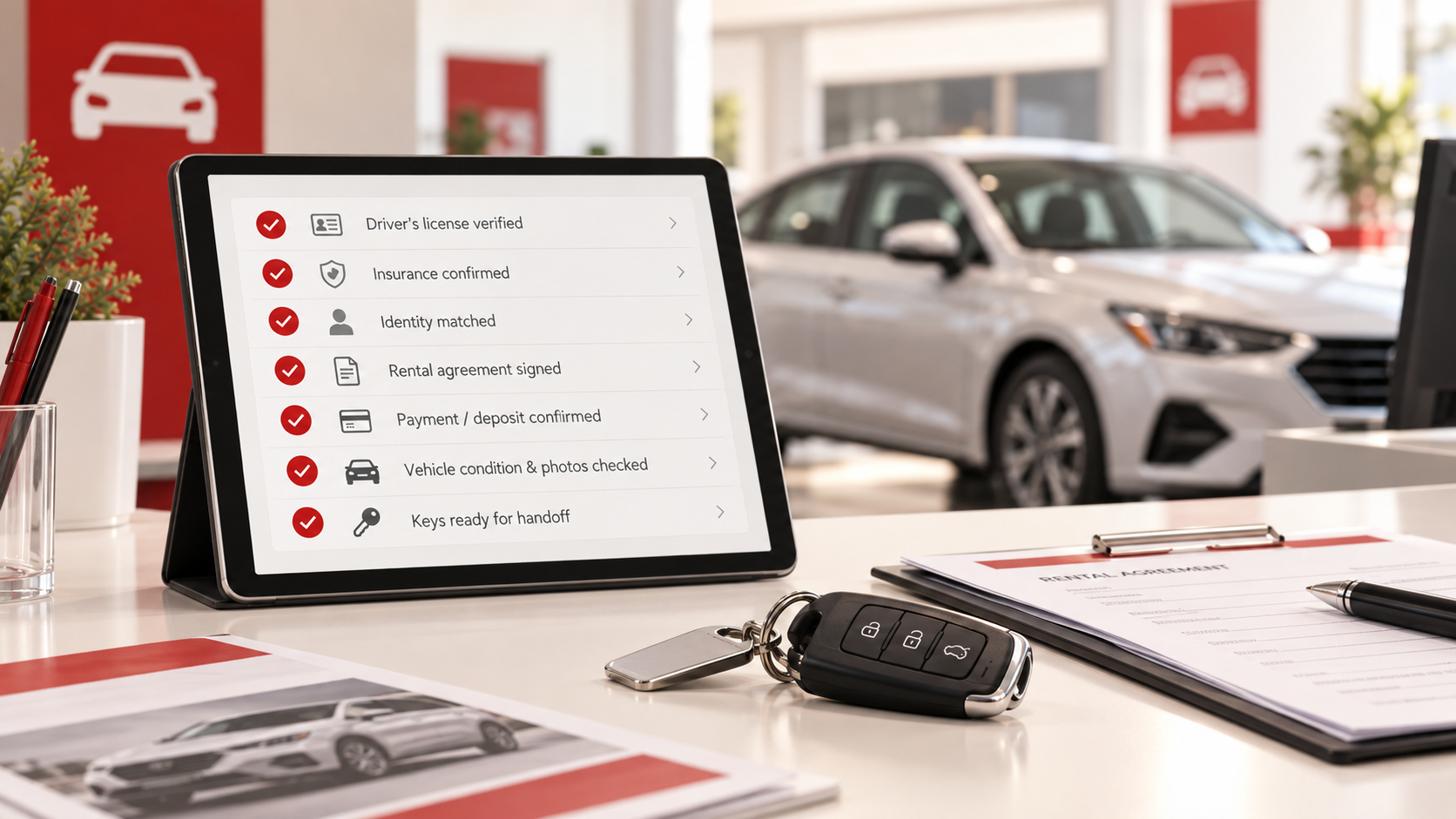
Five things.
| Check | Why it matters | If it fails |
| Policy active today | Lapsed policies look identical on a card | Decline or require purchased coverage |
| Expiry after rental end | A policy expiring mid-rental leaves you exposed | Require coverage through the return date |
| Renter is named insured | A policy covering someone else covers nothing | Manual review, or purchased coverage |
| Liability limits meet minimum | Under-limit coverage leaves a gap you absorb | Require higher limits or purchased coverage |
| Intended use not excluded | Gig and commercial use is commonly excluded | Require appropriate coverage |
The check that gets missed most
The second one. A policy expiring three days into a ten-day rental stops covering your vehicle while your vehicle is still out.
What minimum coverage should operators require?
Start from your state's financial responsibility minimums, then set your own requirement above them. State minimums are a legal floor, not sensible protection for a fleet vehicle.
State minimum liability limits
| State | Minimum liability |
| North Carolina | 50/100/50 |
| Texas | 30/60/25 |
| California | 30/60/15 |
| New York | 25/50/10, plus PIP |
| Florida | \$10,000 PIP \+ \$10,000 property damage |
Read as bodily injury per person / per accident / property damage. Full requirements by state are in our state regulations guide.
Minimums move, so check annually
California raised its from 15/30/5 to 30/60/15 effective January 2025, the first increase since 1967, and North Carolina, Utah and Virginia also raised theirs in 2025\. Our guide to 2026 car rental regulations tracks what else changed.
Why Florida is structurally different
Florida does not require bodily injury liability for most drivers, requiring PIP and property damage instead. Many credit card rental coverage benefits do not extend to Florida rentals because of this. Look at that Florida property damage figure against the replacement cost of a vehicle in your fleet. That is why minimums are a floor and not a target.
Should high-value vehicles require higher limits?
Yes. Set minimum liability requirements by vehicle class rather than one threshold for the whole fleet. Write the thresholds into your terms and apply them consistently. Inconsistent application is both a risk gap and, if it correlates with anything about the renter, a discrimination exposure.
What happens when a renter fails an insurance check?
Offer purchased trip coverage rather than declining outright. A renter who cannot verify their own insurance is not necessarily a bad renter, and a purchase option converts a lost booking into a covered one.
The workable policy
Verify the renter's own coverage, and where it cannot be confirmed or falls short, require them to purchase trip-specific damage and liability protection at checkout before the booking completes. Either path ends with the vehicle covered.
The rule worth stating to staff plainly: no verified or purchased coverage, no keys. Every renter, including regulars.
How FleetHQ verifies renter insurance
FleetHQ runs live carrier checks at checkout rather than accepting uploaded cards, confirming policy status, liability limits and expiry date before the vehicle is released. Renters without their own coverage can buy on-rental protection on your site during booking, and your vehicles between rentals sit under commercial fleet cover. The record attaches to the reservation alongside the agreement and the deposit.
Frequently asked questions
Can policy expiration be checked automatically? Yes. Carrier-connected verification returns effective and expiry dates, so a policy expiring mid-rental is caught before pickup.
Can verification confirm collision coverage? It can return coverage types and limits, though which fields come back varies by carrier and provider.
Can a spouse or household member be covered? Sometimes, as a permitted driver, depending on the policy. Never assume it.
Can insurance be verified before the renter arrives? Yes, and it should be. Verifying at booking turns a failed check into a booking that does not complete.
Can a failed check be reviewed manually? Yes. Borderline cases such as a name variation should route to staff review, with the decision recorded.
How long does insurance verification take? Carrier-connected checks typically return in under a minute.
Does a personal policy cover rideshare or delivery driving? Usually not. Most personal policies exclude commercial activity.
What if a renter has no insurance at all? Offer trip-specific protection purchased at checkout.
The bottom line
A personal policy may cover your vehicle, and a card tells you nothing about whether it does. Confirm status, expiry, named insured, limits and permitted use with the carrier, and offer purchased coverage when any of the five fails.
See how insurance verification works, or read the car rental business insurance guide.