








Car Rental Business Insurance: The 2026 Operator's Guide
New
Trusted by car rental operators across the U.S. →
Car Rental Software Built to Put You in Control
FleetHQ is all-in-one car rental software for Turo hosts and independent operators who want to scale direct bookings, automate day-to-day operations, and keep 100% of what they earn.
Industry-Leading Partners




New
Set custom trip-modification policies in real time →
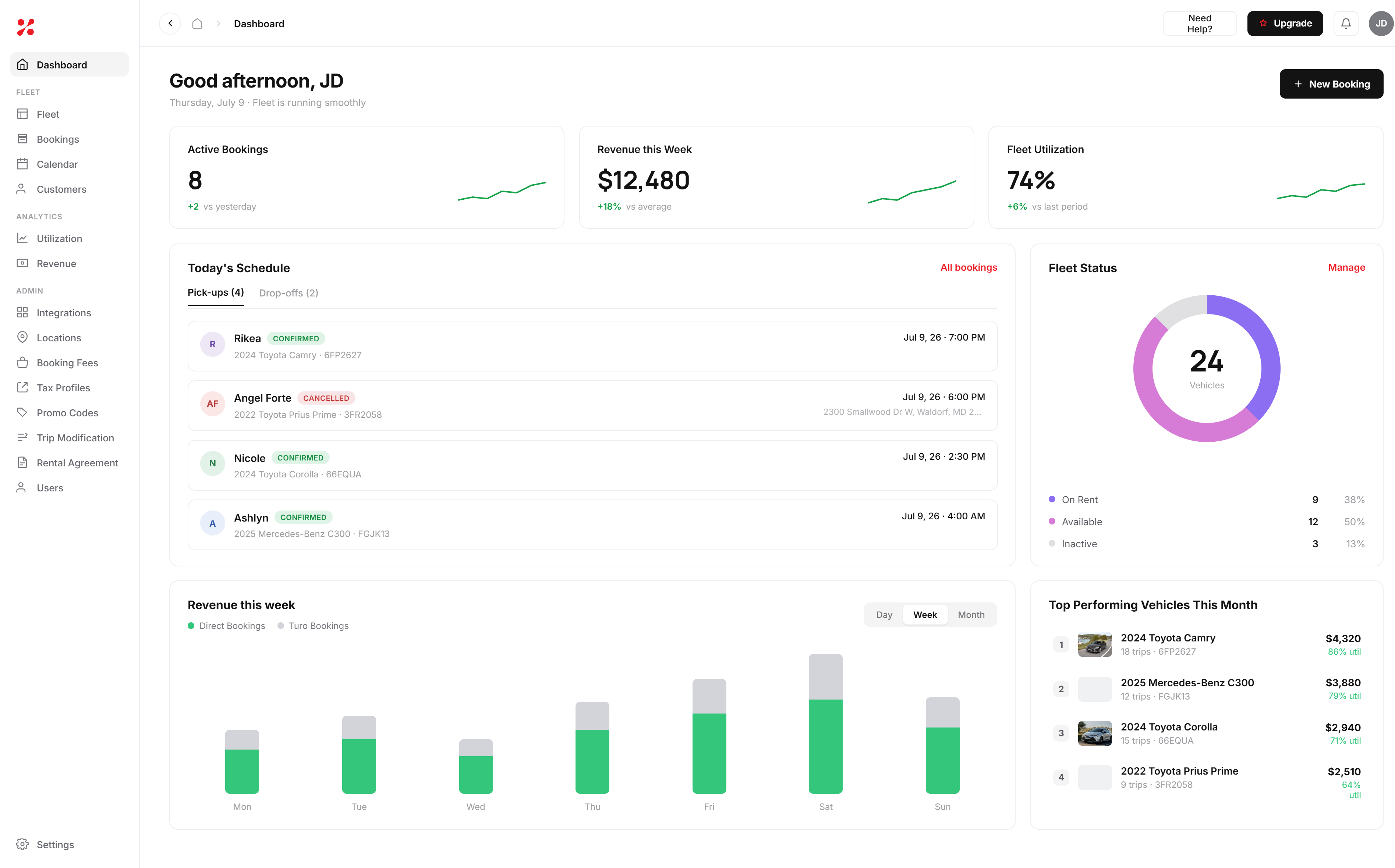
Everything You Need to Run a Modern Car Rental Business in One Platform
Sign in
FleetHQ is car rental management software that gives you complete control over your operations: manage bookings, verify renters, handle payments, and run your fleet without relying on a marketplace. Move off the platform and build something private, and truly your own.
One Car Rental Booking Software for Every Booking, Vehicle, and Payment
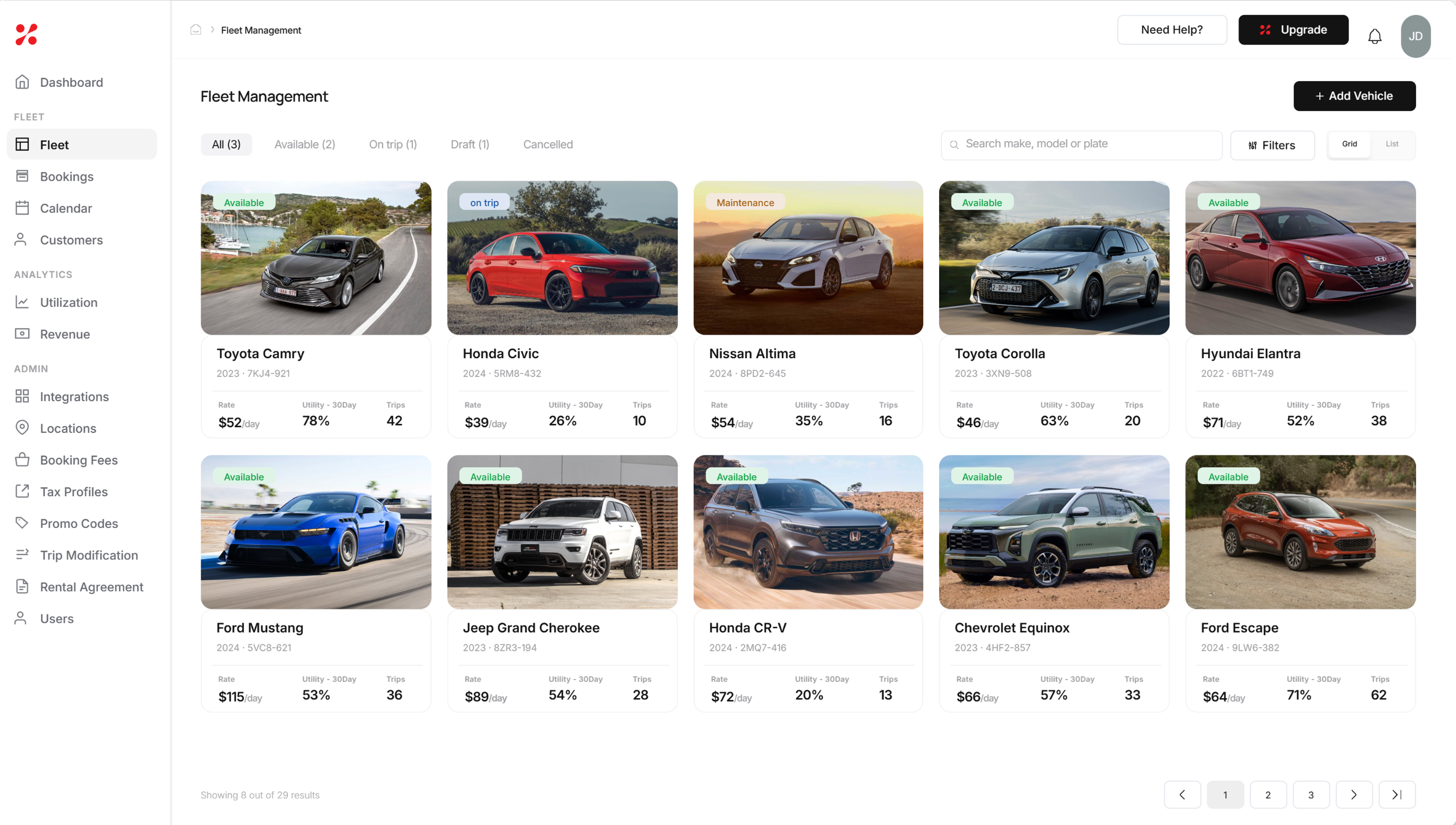
FleetHQ works as a single car rental system that centralizes every booking, vehicle, and payment in one place, from your first direct rental to a full-scale fleet. No spreadsheets, no juggling tools, no missed bookings.
STOP HOSTING.
START
OWNING.
Car Rental Fleet Management Software for Every Type of Rental Business
Daily, hourly, contactless, or marketplace. FleetHQ gives every operator the tools to run their fleet professionally, scale confidently, and own every dollar earned.
Cut the busywork, keep more bookings
Verification, agreements, deposits, and payments run automatically, freeing 10+ hours a week.
Your brand, your customers
A direct booking website puts your name in front of renters and keeps the relationship yours.
STILL RENTING ONLY ON TURO?
Stop Leaking Profit on
Every Booking.
You're doing 100% of the work and keeping a fraction of the win.
See the exact dollars you're leaving on the table by not switching to dedicated car rental business software for direct bookings. Same car, same rates, significantly more profit.
$72/day
57%
WE CAN HELP
YOU SAVE!
Assuming 21 days of utilization on Turo.
$5,040
Annually
Real results from real fleet operators
57%
increase in utilization
$5,900+
saved annually per car
"FleetHQ helped me go from relying on Turo spreadsheets to running my own brand with a real booking system. I'm finally building something that's mine."
Raymond T.
Fleet Owner, Houston, TX
"The Turo sync alone was worth it. No more manually blocking dates, no more double booking nightmares. It just works."
Priya M.
Multi-Platform Host, Los Angeles, CA
100%
revenue kept
10+
hours saved per week
3x
faster renter verification
"We manage 20+ vehicles and keeping track of bookings, payments, and insurance was a nightmare. FleetHQ gave us the control we were missing."
DeShawn W.
Private Rental Operator, Miami, FL
60%
less time on admin
Plans & Pricing
Simple pricing
for every fleet size
Whether you run 3 cars or 30, you get the same full-feature platform. Pick the plan that fits your fleet.
Starter
Perfect for independent operators just getting started.
$119
/mo
Up to 15 Cars
Includes:
- Mobile Optimized Branded Website
- Direct Fleet Booking
- Renter ID & Insurance Verification
- Payment Integration
- Bonzah Damage & Liability Insurance
- Automated E-Sign Agreements
- Turo Calendar Sync
- Booking Calendar with Turo View
- Manual Price Customization
- Security Deposit Handling
- Real-Time Analytics
Professional
POPULAR
For growing teams managing larger fleets.
$199
/mo
Up to 75 Cars
For growing teams, includes:
- Everything in Starter
- Support for larger fleets (up to 75 cars)
- Renter Criminal Background Check
- Priority Feature Access
Enterprise
For large organizations running fleets at scale.
Custom
/mo
75+ Cars
For large organizations, includes:
- Everything in Professional
- Support for fleets more than 75
- Flexible Invoicing
- Priority support